
AMIRI Bones Kicks Rock Luxe Aesthetic
Buying AMIRI Online Without Getting Burned
AMIRI, a Los Angeles house, has everyday pieces observed roughly between $420 and $1,300 in market listings, and that is exactly the band counterfeit sellers work hardest to mimic. The brand sells directly through its own website and through a published list of authorised stockists, and almost everything outside those two groups deserves a second look. Type buy amiri online, amiri clothing, amiri hoodie and amiri men, and the results page mixes department stores, marketplace resellers and outright fakes within a few positions of one another. This guide takes the channels one at a time and says plainly what each one actually is. The figures here are observed market prices recorded in 2026; not one of them comes from an official price list. The single most useful habit is to test any unfamiliar seller against the brand’s own published stockists page before entering a card number.
The Brand’s Own Website
A single official e-commerce operation is run by the house, and it is the only online shop the brand itself controls. Shipping stretches to more than two hundred countries and regions, and the full current assortment is carried across men’s, women’s and kids’. Returns run to ten days from delivery for unworn merchandise with tags attached, with final-sale amiri ripped jeans items excluded. After-sales service and repairs are handled case by case, only for products bought from that site, and repair fees can apply. Roughly thirty-three physical boutiques are run by the same operation, several still labelled as coming soon on the store locator. The first permanent store opened on Rodeo Drive in Beverly Hills in 2020, and Milan later became the first permanent European location.
The Authorised Multi-Brand Retailers
A stockists page is published by the brand, and every retailer named there holds a direct wholesale relationship with the house. The United States section blends department stores and specialist boutiques, while Europe accounts for dozens of entries, Italy owning the longest single-country roster. The list is worth having not for cheaper prices, which at full price it does not deliver, but because the goods it points to are unambiguously genuine. One caveat matters a great deal: that stockists page is not closely maintained. The page still lists a well-known British retailer that shut down in 2024 and misspells several shop names, both marks of something kept as marketing rather than as a live directory. Treat it as a whitelist of names to recognise, and never as proof that a given shop is still trading.
- Present on the brand’s own published online list: Mr Porter, SSENSE, Mytheresa, LuisaViaRoma, Browns, END., 24S, Monnier
- United States names: Nordstrom, Saks Fifth Avenue, Neiman Marcus, Bergdorf Goodman, Maxfield, The Webster
- Further afield: Selfridges, Harrods, Harvey Nichols, Holt Renfrew, Galeries Lafayette
The Place Farfetch Claims
Of all the channels, Farfetch causes the most confusion, and honestly it sits in no clean category. The brand’s own online stockist list does not name it, so calling it an official stockist overstates the relationship. Equally it is not an unauthorised seller: it works as a marketplace for boutiques that are named stockists in their own right, several of them Italian. What happens in practice is that the garment often ships from a shop with a real wholesale account, while the storefront itself appears nowhere on the list. Hold onto the nuance, because most guidance flattens it one way or the other. Should you buy there, pin down which boutique is fulfilling the order and whether that name appears on the stockists page.
Sale Sections and Off-Price Outposts
Any piece suggesting this brand never discounts is flatly incorrect, and that discounting shapes everything else in the market. Visible in-season markdowns come from authorised multi-brand retailers, with observed reductions of roughly forty to seventy percent on jeans, hoodies and outerwear. A jean listed at $1,345 has been observed at $673; a varsity jacket listed at $2,310 has been observed at $1,155. The off-price arms of established retail groups, including Saks OFF 5TH, carry the label too and sell past-season stock at steep reductions. Legitimate is the right word for those goods, and the seller is a real retailer working through surplus, not a fly-by-night outfit. Emphatically, none of that amounts to a brand outlet, and the whole of the next section turns on the distinction.
The Outlet That Does Not Exist
Nothing in this article matters more, and it comes from the brand itself in a court filing, not from a blog. Filed in July 2021, a federal court complaint records AMIRI stating that it “does not have an AMIRI outlet store, nor has it ever authorized any person or business to operate such a store.” The suit was brought in the United States District Court for the Central District of California against an internet service provider the brand alleged was knowingly hosting a counterfeit-selling site styling itself as an AMIRI outlet. Branding itself an “Official Discount Store” and advertising “100% Original Products”, the site claimed to stock more than a hundred authentic pieces at deep discounts. In September 2021 the case was voluntarily dismissed, most likely on settlement, yet the brand’s statement stands on the record. No official outlet exists anywhere, then, whether online or physical. Any storefront presenting itself as an AMIRI outlet is by definition not the brand, and that single test disqualifies it before you look at anything else.
How a Fake Outlet Site Announces Itself
These storefronts share a template, and once you have seen the pattern it is hard to unsee. Below are tells taken from the documented 2021 case and from how such operations generally look; they are described and not named, because naming a domain sends traffic to it. None of the items is proof by itself, yet three or four together are telling. The strongest test is still absence from the brand’s published stockists page, and carrying it out takes about fifteen seconds. Next comes the discount pattern: no authorised channel cuts current-season stock across every category at once. Read the checkout page as carefully as the product page, since payment handling is where these operations most often give themselves away.
- A web address built by joining the brand name to a trust word such as outlet, official, shop, store or sale
- Status the shop claims on its own: “Official Site”, “Official Discount Store”, “100% Original Products”, “Authentic Guaranteed”
- Discounts of fifty to eighty percent across the entire shop, current-season pieces included
- An implausibly large catalogue illustrated with scraped official campaign photography
- Nothing on the stockists page, and no verifiable company registration, address or telephone number
- Countdown timers, “only two left” mechanics, and a payment processor whose name does not match the shop
Weighing the Channels
Two questions matter, and the table measures every channel against both: are the goods certainly genuine, and what will you pay against full price. Observed behaviour in 2026 is what the pricing column describes; it is not an official price list. Authentication risk is a judgement about the channel, not a promise about any individual seller inside it. Only goods bought directly from the brand or from an authorised stockist partner will be verified, and the brand states plainly that it cannot authenticate items bought outside those channels. That policy is why provenance matters more than micro-inspection of stitching as the thing to optimise for. The final row should be read as an absolute rather than a caution.
| Route | Status | Pricing observed | Risk to authenticity |
|---|---|---|---|
| The house’s own online store | Official in the fullest sense | Full price, no reductions | None at all |
| The stockists the brand names | Official wholesale | Full price, followed by the seasonal sale | As low as it gets short of none |
| Farfetch | A marketplace hosting stockist boutiques | Both full price and sale | Low, provided you check the fulfilling boutique |
| Off-price arms of retail groups | Legitimate, past-season stock | Cut by 40 to 70 percent | Low overall |
| Peer-to-peer platforms | Peer-to-peer | Below retail more often than not | Genuine risk, varying by platform |
| Any self-declared outlet | Nonexistent | Irrelevant | Total |
A Short Routine Before You Pay
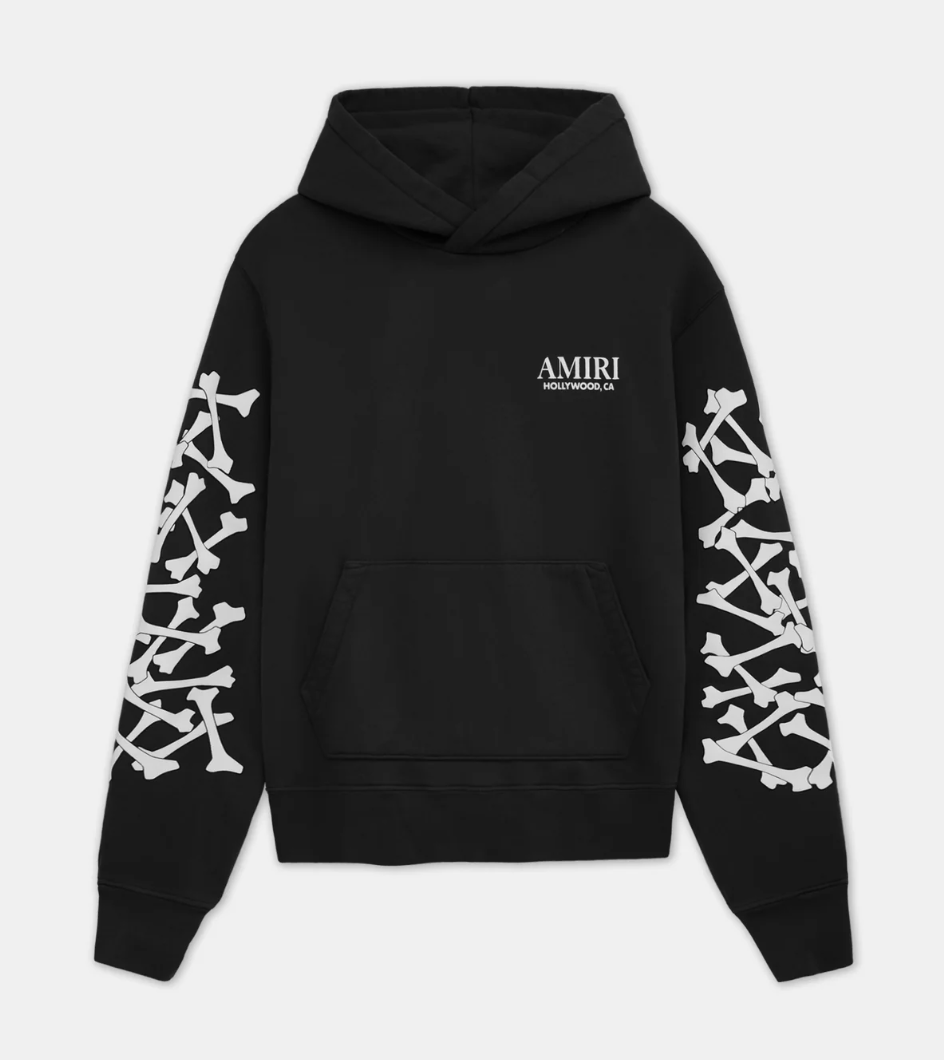
Complexity is not required here; the whole check runs shorter than choosing a size. First ask whether the shop’s name appears on the brand’s published stockists page; a marketplace adds one further question about who is fulfilling the order. Turn then to the discount, since current-season amiri jeans at seventy percent off from an unfamiliar storefront reads as a signal rather than a bargain. Confirm that the stated country of origin is plausible for the style, because origin varies by product and a mismatch is among the more reliable red flags. Save the order confirmation and the invoice, because the brand’s verification policy runs on proof of purchase. If a site describes itself as an outlet, close the tab.